
Feed Pellet Coating Machine Add Oil and Additives After Pelleting, Not Before
Fat added before pelleting weakens the pellet structure — above about 8–10% the pellet starts falling apart. A coating machine sprays oil, enzymes, vitamins and attractants onto finished pellets instead, so you can reach 20% fat or add heat-sensitive additives without damaging the pellet.
Reference FOB price: USD 4,500 – 12,000 by configuration. Spray rate and pump sizing matched to your line.

The Way to Put Oil In Without Breaking the Pellet
This is the machine that makes high-energy feed possible. Fat is the cheapest energy source in the formula, but it cannot go through the die in large amounts. Coating after pelleting removes that limit entirely.
Up to 20%+
Fat is absorbed into the cooled pellet rather than blocking the die — the only practical route to high-energy feed.
Added cold
Enzymes, probiotics and vitamins that would be destroyed by conditioning heat are added after cooling.
Surface coating
Shrimp and fish attractants work best on the pellet surface where the animal detects them.
96% uniformity
Spray system with metered pump gives even coverage rather than wet spots and dry pellets.
Tank, Pump, Drum — Three Jobs on One Frame
A coating system is easier to specify once you stop treating it as one machine.

What each part actually does
The tank stores, the pump meters, the drum distributes. Most buying mistakes come from sizing only the drum and then discovering the pump cannot hold the ratio at line rate.
The tank holds up to 1 t of oil or liquid additive. At a 3% spray ratio on a 10 t/h line that is roughly three hours of running between refills — long enough that nobody tops it up mid-shift and quietly changes the inclusion rate.
The pump is a geared unit on a 1.5 kW motor. It holds flow to the set rate instead of running flat out, which is where the ±1% dosing figure comes from. The rate is set once for the product and changed only when the formula changes.
The drum is where the work happens: pellets enter one end, rotation lifts and cascades them, and the spray manifold wets them as they fall. Retention is measured in seconds — long enough to transfer liquid, short enough that the pellet is not abraded on the way through.
Feed Pellet Coating Machine Specifications
One platform covering 2–20 t/h. Spray ratio and pump capacity are set to your inclusion rate.
| Parameter | Value | What it means |
|---|---|---|
| Model | SYPG | Single platform covering the 2–20 t/h range |
| Liquid storage tank | 1 t maximum | Holds oil or liquid additive supply for continuous running |
| Additive pump power | 1.5 kW | Geared pump delivers metered flow to the spray nozzles |
| Addition accuracy | ± 1% | Metered dosing rather than estimated pouring |
| Coating uniformity | 96% | Share of pellets receiving even coverage |
| Addition rate | 0.04–0.14 t/h | Liquid volume applied per hour |
| Spray ratio | 2–7% of pellet mass | Typical inclusion range for oil and additives |
| Line capacity | 2–20 t/h | Matches plants from small commercial to industrial |
For spray ratios above 7%, or fat levels above about 12%, ask us about a vacuum coating configuration — vacuum draws oil into the pellet instead of leaving it on the surface.
When you need coating
- Fat inclusion above about 8–10%.
- Enzymes, probiotics or heat-sensitive vitamins.
- Aquatic attractants that must sit on the surface.
- Premium products where energy density is the selling point.
Why not just add fat to the mixer?
Fat lubricates the mash and prevents it binding in the die. Above roughly 8–10% the pellet loses durability, generates fines and can block the die entirely.
Adding the same fat after pelleting gives you the energy without any of the structural cost — which is why coating pays for itself on high-fat formulas.
Quick quote — coating machine configuration
Tell us the liquid type, inclusion rate and line T/H. We reply with the configuration, pump sizing and landed price. Send the details to info@pelletmachines.net or WhatsApp +86 186 0385 1787 — engineers reply within 12 hours.
Spray, Meter, Tumble
Three actions in one drum. The tumbling is what converts sprayed liquid into even coverage.
Metering
A geared pump draws liquid from the storage tank at a metered rate set to the target spray ratio.
Spraying
Nozzles spray liquid onto pellets as they enter the coating drum.
Tumbling
The drum rotates and tumbles pellets so sprayed liquid distributes across the whole surface.
Discharge
Coated pellets discharge to the cooler or directly to packing, depending on your line layout.
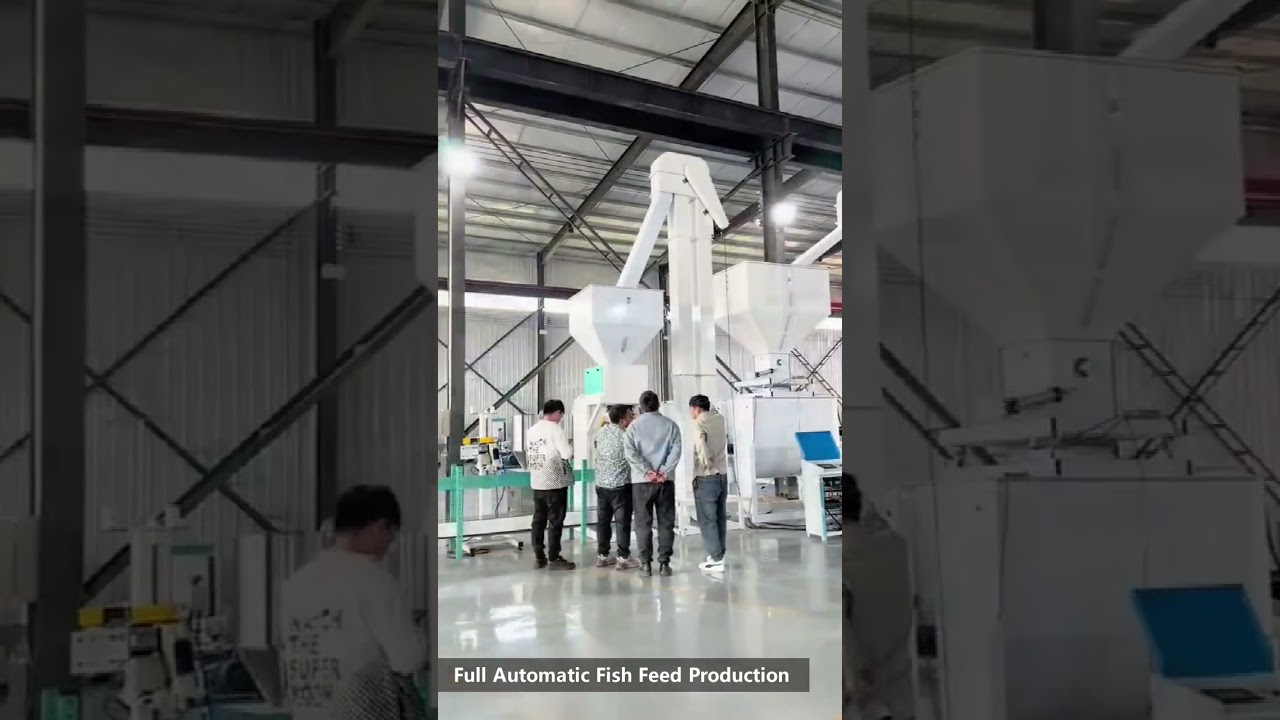
Complete wet type fish feed production line
High-fat aquatic feed lines are the main application for post-pellet coating.
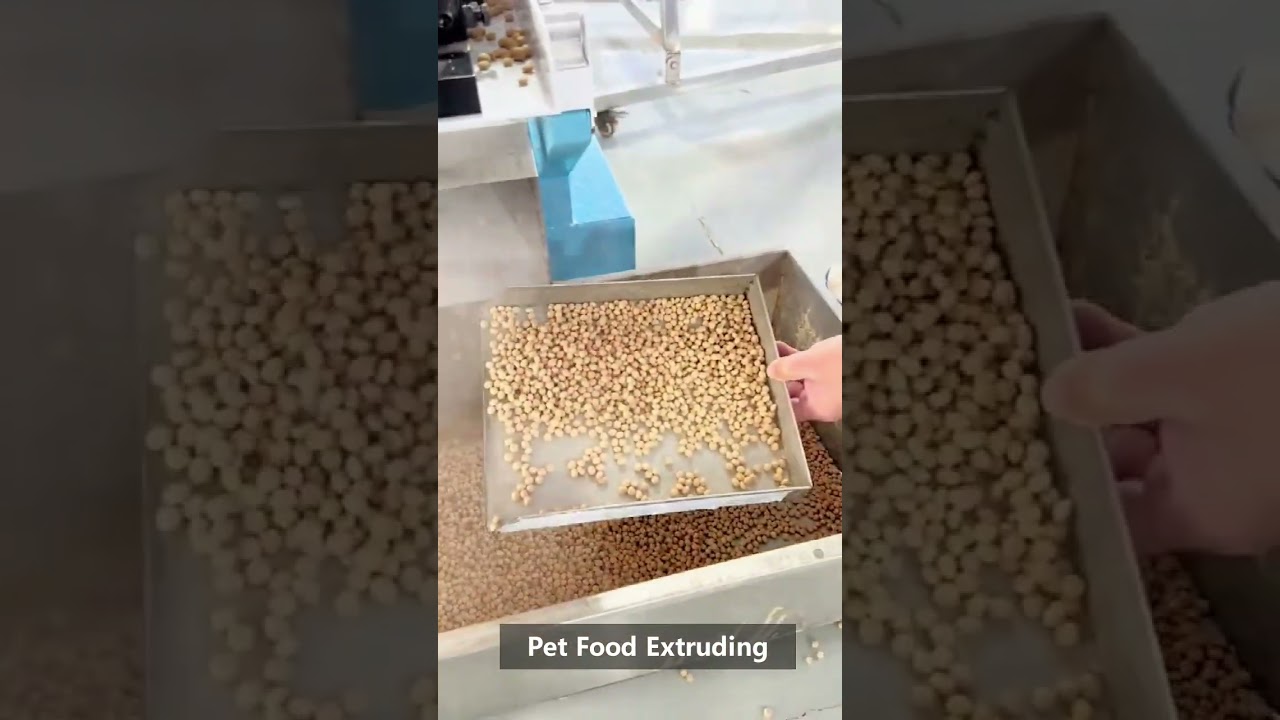
DGP85 pet food kibble production
Pet food kibble is routinely coated — a good example of after-extrusion coating.
Where the Coater Sits, and Why the Order Matters
Position decides whether the oil goes into the pellet or stays on the outside of it.
After the cooler, before the sieve
The standard position is after the cooler and before the grading sieve or the packing scale. Coating before cooling works for a few products but it is not the default: warm pellets take oil unevenly and the surface stays tacky in the bag.
Two configurations cover the range and they are not interchangeable. Atmospheric spraying lands liquid on the surface and tumbling spreads it — good to about 7% spray ratio, simple and inexpensive. Vacuum coating pulls the drum down to roughly −0.098 MPa, sprays, then releases; the pressure difference carries oil into the pellet instead of leaving it on the skin.
That is how premium aquatic feed reaches 20–25% fat without the pellet turning greasy or losing durability. Below 8% the atmospheric machine does the same job for less money, so tell us the target fat level — we will specify the cheaper of the two rather than sell the same drum for both jobs.

What Producers Coat Onto Pellets
Fat is the most common, but the machine handles anything pumpable and heat-sensitive.
| Coating material | Typical ratio | Why coat instead of mix |
|---|---|---|
| Vegetable or fish oil | 2–7% | Raises energy density without weakening the pellet |
| Enzymes & probiotics | 0.05–0.5% | Destroyed by conditioning heat — must be added cold |
| Vitamins & pigments | 0.05–0.5% | Heat-sensitive; coating preserves activity |
| Aquatic attractants | 0.5–2% | Must sit on the surface where the animal detects it |
| Molasses (post-coat) | 2–5% | Surface sweetness and dust suppression |
| Anti-mould agents | 0.05–0.2% | Surface protection where mould risk is highest |
Anything above 7% total spray ratio, or fat above about 12%, should use a vacuum coating configuration rather than atmospheric spraying.
Atmospheric spray or vacuum coating
Atmospheric spraying works well up to about 7% spray ratio. Liquid lands on the pellet surface and is distributed by tumbling — simple, cheap, effective for most applications.
Vacuum coating is the upgrade for high fat levels. Pellets are sprayed under vacuum, and when the vacuum is released the pressure difference draws oil into the pellet structure. That is how premium aquatic feed reaches 20%+ fat without the pellet becoming greasy or falling apart.
Tell us your target fat level when you enquire and we specify the right configuration rather than selling you the same drum for both jobs.

- Add fat after pelleting — no loss of pellet durability
- Heat-sensitive enzymes and vitamins survive the process
- ± 1% metering accuracy and 96% coating uniformity
- One platform covers 2–20 t/h line capacity
- Vacuum configuration available for fat levels above 12%
- 1 t liquid storage tank for continuous running
Tank, Valve, Nozzle, Finished Pellet
The parts that decide whether the ratio holds, and the pellet that comes out the other end.


Feed Pellet Coating Machine Questions
How much does a feed pellet coating machine cost?
Why coat instead of adding fat to the mixer?
Can it handle enzymes and probiotics?
What is the difference from a vacuum coater?
How accurate is the addition?
What line capacity does it cover?
Where does it sit in the line?
What is the warranty and support?
Ask for a coating system proposal
Send the liquid type, inclusion rate and line throughput. You get the configuration, pump sizing and investment range within 12 hours. Send the details to info@pelletmachines.net or WhatsApp +86 186 0385 1787 — engineers reply within 12 hours.
Coating, Cooling and Finishing Equipment
- Counterflow Pellet Cooler
- Feedstuff Liquid Adding Machine
- Rotary Grading Sieve
- Fish Feed Pellet Production Line
- Wet Type Fish Feed Pellet Mill
- Fish Feed Pellet Machine
- Ring Die Aquatic Feed Pellet Mill
- Weighing & Packing System
- PLC Control System
- DGP70 Wet Line to Nigeria
- 5 Sets Extruder to Ghana
- Plant Installed in Bangladesh
Add Fat Without Losing Pellet Quality
Send the liquid type, inclusion rate and line throughput. You get the configuration, spray ratio and investment range within 12 hours.


