
PLC Control System for Feed Pellet Plant One Cabinet Running the Whole Line
A feed line has a correct start-up and shutdown order, and getting it wrong blocks elevators, trips motors and damages equipment. A PLC cabinet enforces that sequence automatically, monitors motor load and temperature, shows the operator what is running, and shuts the line down safely on a fault.
Reference FOB price: USD 2,500 – 25,000 by plant size and automation level. Control philosophy designed to your equipment list.

Control Room and Field Control in One System
The system combines a master control position with field control at each machine, so the operator can see the state of the whole line from one screen and still start or stop an individual machine locally when needed.
No blockages
Start-up and shutdown run in the right order automatically — downstream first, upstream last.
See motor current
Running current and speed of main equipment displayed live; rising load warns of a developing blockage.
Protects equipment
A fault on any machine stops the upstream feed safely instead of packing the elevator or cooler.
Less labour
Fewer operators needed; consistent batches regardless of who is on shift.
What Is Actually Inside the Cabinet
You are buying the engineering between the components, not the components.

Frame, busbar, starters, controller
A cabinet is a frame, a busbar, a set of starters and a controller. What decides whether it works is how many motors are interlocked, what is actually measured, and what the operator can see without opening a door.
The controller is a PLC with remote I/O at the machines, so field wiring runs stay short and a sensor is added at the machine instead of being pulled back to the cabinet. The doors carry the mimic diagram — the line drawn as it is built, with running lamps and meters at the points that matter.
Starters are sized to the motor, not to the price. Every motor gets overload protection and a local isolator, because the person clearing a blockage is standing next to the machine, not at the cabinet.
We build to your equipment list. Send the motor schedule — kW, starting method, whether it is inverter-driven — and the I/O count falls out of it. That count, not the plant tonnage, is what actually sets the price.
Functions and Benefits Across the Line
The cabinet is configured to your equipment list. Below is the standard function set we build into every system.
| Function | What the operator sees or gets | Why it matters |
|---|---|---|
| Sequenced start-up | One button starts the line in the correct order | Prevents blocked elevators and tripped motors |
| Sequenced shutdown | One button empties and stops the line safely | No material left to harden in machines overnight |
| Motor load display | Running current of each main motor | Rising current warns of blockage before it happens |
| Temperature monitoring | Bearing and conditioner temperature where fitted | Early warning of overheating |
| Line status display | Which machines are running, stopped or faulted | Full-line visibility from one screen |
| Fault interlock | Upstream stops automatically on a downstream fault | Protects equipment and prevents spillage |
| Field control | Local start/stop at each machine | Safe maintenance and manual intervention |
| Alarm history | Recorded faults with timestamps | Diagnosing recurring problems becomes possible |
Automation level is set to your plant — from a simple sequence cabinet for a small line to full SCADA visualisation for an industrial plant.
When a PLC system pays for itself
- From about 1 T/H upward — motor sequence starts to matter.
- When the line has three or more conveying stages.
- When you run two or more shifts with different operators.
- When downtime from blockages is costing you output.
When you can do without it
On a small line — up to about 600 kg/h with one or two conveying stages — individual motor starters are usually adequate. Adding a PLC at that scale is cost without much benefit.
We will tell you honestly if your plant does not need one.
Quick quote — PLC system for your line
Tell us your equipment list, plant capacity and required automation level. We reply with the control philosophy and landed price. Send the details to info@pelletmachines.net or WhatsApp +86 186 0385 1787 — engineers reply within 12 hours.
How the Cabinet Runs Your Line
Four functions that run continuously — sequence, monitor, interlock, record.
Start command
Operator presses start; the cabinet starts downstream machines first, upstream last.
Running monitor
Load, speed and temperature are sampled continuously and shown on the screen.
Interlock
A fault on any machine stops the upstream feed so material does not pile into it.
Shutdown
Stop command empties each stage in sequence, then stops motors — nothing left inside.
Recording
Faults and events are logged with timestamps for later diagnosis.

Showroom — control systems in complete feed plants
See the control cabinet and operator position in working plants.
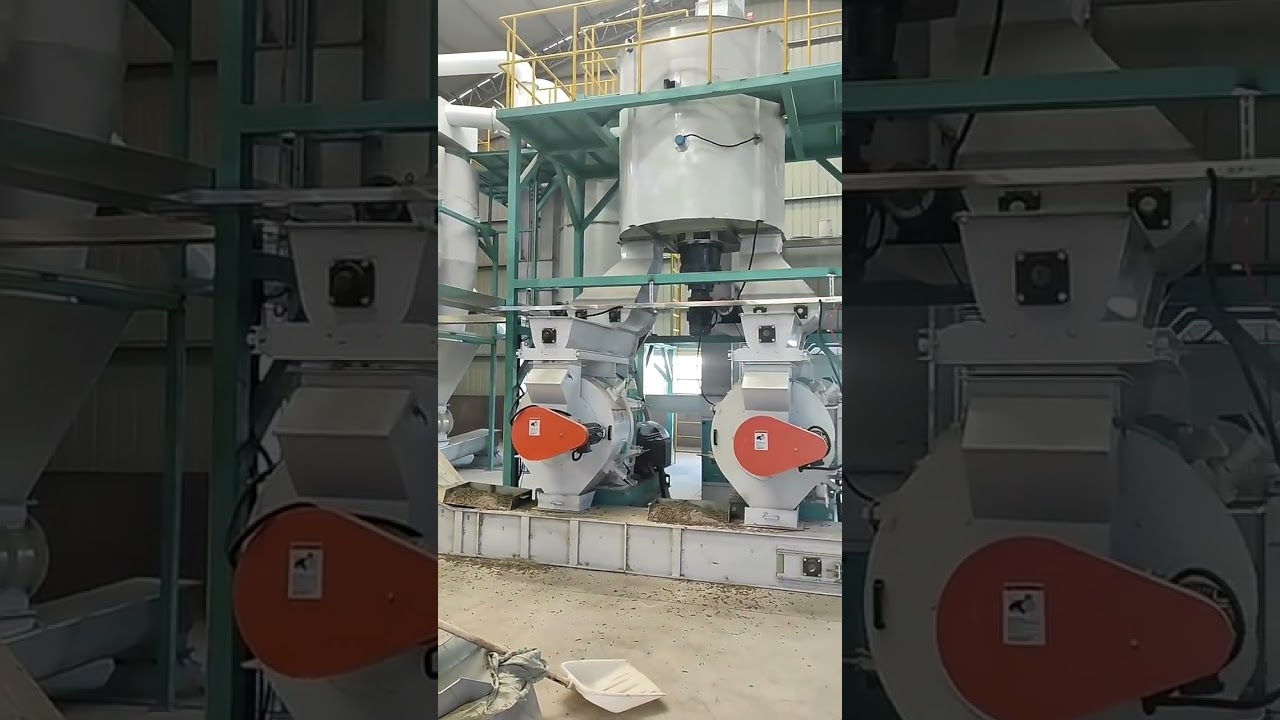
4 TPH ruminant animal feed pellet plant
A plant of the size where sequenced control starts earning its cost.
What to Put in the Enquiry
Five numbers decide the price of a control system. Have them ready and the quote is accurate first time.
| Item | Typical range | Why it moves the price |
|---|---|---|
| Motors controlled | 8–60 | Sets starter count, cabinet size and cable schedule |
| Digital I/O | 32–400 points | Level switches, proximity sensors, interlocks, valve feedback |
| Analogue channels | 0–24 | Load cells, bearing temperature, motor current |
| Controller tier | Basic / standard / SCADA | Reporting, recipe management, remote access |
| Inverter drives | Optional | Soft start and speed control on feeders and screws |
Send the motor schedule with the enquiry and we return the I/O count and the control philosophy with the price, rather than after the order.
- Every motor interlocked, not just the main drives
- Tolerance alarms on load cells, so a drifting scale is flagged before a batch is out of spec
- Alarm history with timestamps — the difference between fixing a fault and guessing at it
- Field isolators at each machine for safe maintenance
Which Level of Automation Suits Your Plant
More automation is not automatically better. Match the level to plant size and to the skill available on each shift.
| Plant size | Recommended level | What it includes |
|---|---|---|
| Up to 600 kg/h | Individual motor starters | Local start/stop per machine, overload protection |
| 600 kg/h – 1 T/H | Basic sequence cabinet | Sequenced start/stop, overload protection, status lamps |
| 1–5 T/H | Standard PLC cabinet | Sequence, load display, interlocks, alarm history, screen |
| 5–10 T/H | PLC with visualisation | Line mimic diagram, recipe management, trend logging |
| 10–20 T/H | Full plant SCADA | Full visualisation, production reporting, remote access option |
We design the control philosophy to your equipment list rather than selling a fixed package — tell us what you run and we specify accordingly.
What it protects you from
Blocked elevators are the most common expensive failure in a feed plant. Starting the wrong machine first packs material into a stationary elevator, and clearing it is hours of dirty work plus possible damage to the flight and casing.
Motors running at rising load is the second. A partially blocked cooler or a worn die shows up as climbing current long before anything trips. A load display turns that into a visible warning instead of a surprise.
Material left in machines overnight is the third. Sequenced shutdown empties each stage before stopping, so the line starts clean the next morning instead of fighting hardened material.

- One-button start-up and shutdown in the correct sequence
- Live motor load, speed and temperature monitoring
- Fault interlock stops upstream feed before material piles up
- Field control at each machine for safe maintenance
- Alarm history with timestamps for diagnosing recurring faults
- Automation level matched to plant size — no overselling
Control Cabinets Built and Wired by Us
Every cabinet is assembled, wired and simulated against your equipment list before it leaves the factory.


PLC Control System Questions
How much does a PLC control system cost?
Do I need one for my plant?
What does sequenced start-up actually prevent?
Can it be added to an existing line?
What can the operator see?
What happens when a machine faults?
Can I run the plant manually?
What is the warranty and support?
Ask for a control system proposal
Send your equipment list, plant capacity and required automation level. You get the control philosophy and investment range within 12 hours. Send the details to info@pelletmachines.net or WhatsApp +86 186 0385 1787 — engineers reply within 12 hours.
Control, Batching and Line Equipment
- Automatic Batching System
- Weighing & Packing System
- Double Paddle Feed Mixer
- Ring Die Feed Pellet Mill
- Counterflow Pellet Cooler
- Poultry Feed Hammer Mill
- Feed Pellet Production Line
- 800–1000 kg/h Feed Pellet Plant
- Fish Feed Pellet Production Line
- Plant Installed in Bangladesh
- Pellet Mill to Pakistan
- Hammer Mills to Palestine
Run the Whole Line From One Cabinet
Send your equipment list and plant capacity. You get the control philosophy, automation level recommendation and investment range within 12 hours.


