

Diesel Flat Die Feed Pellet Mill Portable Pelleting Where Power Is Unreliable
A diesel engine drives the same flat die pelleting head, so you can make feed pellets in a field, a village or a farm shed with no grid connection. Clutch and speed-change gearbox let you match roller speed to hard or soft material, and the whole unit can be moved on a trailer.
Reference FOB price: USD 1,200 – 7,500 by model. Trailer-mounted and electric-start options available.

Pelleting Without a Power Line
In many rural markets the grid is unreliable or absent within a few kilometres of the farm. A diesel flat die mill solves that: the diesel engine drives the rollers directly through a clutch and reduction gearbox, so production stops depending on the utility company and starts depending on your fuel drum.
Remote areas
Pellet at the farm where the animals are — no transport of raw grain to a distant mill.
Trailer mounted
Mounted on a two-wheel trailer, one machine can serve several villages on a rotating schedule.
Power-cut insurance
Many customers keep one diesel unit as backup next to an electric line that runs on unreliable power.
Small pond farms
Fresh sinking pellets made at the pond side, 2–4 mm, no storage loss.
Diesel Flat Die Feed Pellet Mill Specifications
Output is quoted for dry grain mash at 12–15% moisture. Sawdust and other woody material are harder to compress and run at roughly half that figure — always size the machine on the material you actually run.
| Model | Output (kg/h) | Die dia. (mm) | Engine power | Dimensions L×W×H (mm) | Weight (kg) |
|---|---|---|---|---|---|
| PM-150A | 80–120 | 150 | 10 hp | 950×600×800 | 165 / 190 |
| PM-200A | 200–300 | 200 | 15 hp | 1240×800×900 | 350 / 380 |
| PM-260A | 400–600 | 260 | 30 hp | 2000×770×1100 | 480 / 520 |
| PM-300A | 600–800 | 300 | 41 hp | 2300×700×1250 | 850 / 890 |
| PM-400A | 800–1,200 | 400 | 55 hp | 2300×700×1250 | 1050 / 1,100 |
Diesel consumption is roughly 1.2–2.5 litres per hour depending on model and material hardness. Pellet diameter 2–8 mm by die change. Weight is given as net / gross (packed for export). Electric start, battery and trailer frame are optional.
Why the clutch matters
A diesel engine has to be started under no load. The clutch lets the engine spin up freely and then engage the pelleting head, and the reduction gearbox lets you slow the rollers for hard, fibrous material or speed them up for soft grain mash. Without these two, a diesel mill stalls on start-up and burns belts.
What we configure to your market
- Hand crank, electric start or battery start.
- Trailer frame, hopper extension, discharge chute.
- Spare die, roller set and engine filter kit shipped together.
Quick quote — diesel model and fuel estimate
Tell us the material, target output and whether you need trailer mounting. We reply with the model, estimated litres per hour and a landed price. Send the details to info@pelletmachines.net or WhatsApp +86 186 0385 1787 — engineers reply within 12 hours.
Diesel or Electric Drive — Which One Should You Buy?
The machines pellet identically; the difference is running cost, mobility and what happens when the power cuts. Use this table to decide before you ask for a quote.
| Item | Diesel flat die mill (this page) | Electric flat die mill |
|---|---|---|
| Power source | Diesel engine 10–55 HP | Electric motor 4–30 kW |
| Grid dependency | None | Required |
| Running cost per hour | Diesel 1.2–2.5 L/h | Electricity, typically cheaper where the grid is stable |
| Mobility | Can be trailer mounted and moved daily | Fixed installation |
| Noise | Higher — engine noise plus pelleting | Lower |
| Maintenance | Engine service: oil, filters, belts | Motor is near maintenance-free |
| Purchase price | About 20–30% higher for the same output | Lower |
| Best for | Remote farms, mobile service, unstable power | Fixed site with reliable three-phase power |
If you have reliable grid power and a fixed site, take the electric flat die pellet mill. If power cuts are routine or you need to move the machine, diesel pays for itself quickly.
How the Diesel Unit Pellets
The pelleting head is identical to the electric version. Only the drive side changes — and that is where the clutch and reduction box do their work.
Start free
Start the diesel engine with the clutch disengaged so the engine spins without pelleting load.
Engage
Engage the clutch; the reduction gearbox transfers torque to the roller shaft at working speed.
Feed in
Mash falls from the hopper onto the die; rollers press it through the die holes under pressure.
Cut
The knife under the die cuts strands to length; knife position sets pellet length.
Cool & bag
Pellets leave at 60–80 °C. Spread to cool before bagging or they sweat and mould.

Small flat die pellet production line running
A compact flat die line in real production — the same pelleting principle used on the diesel unit.
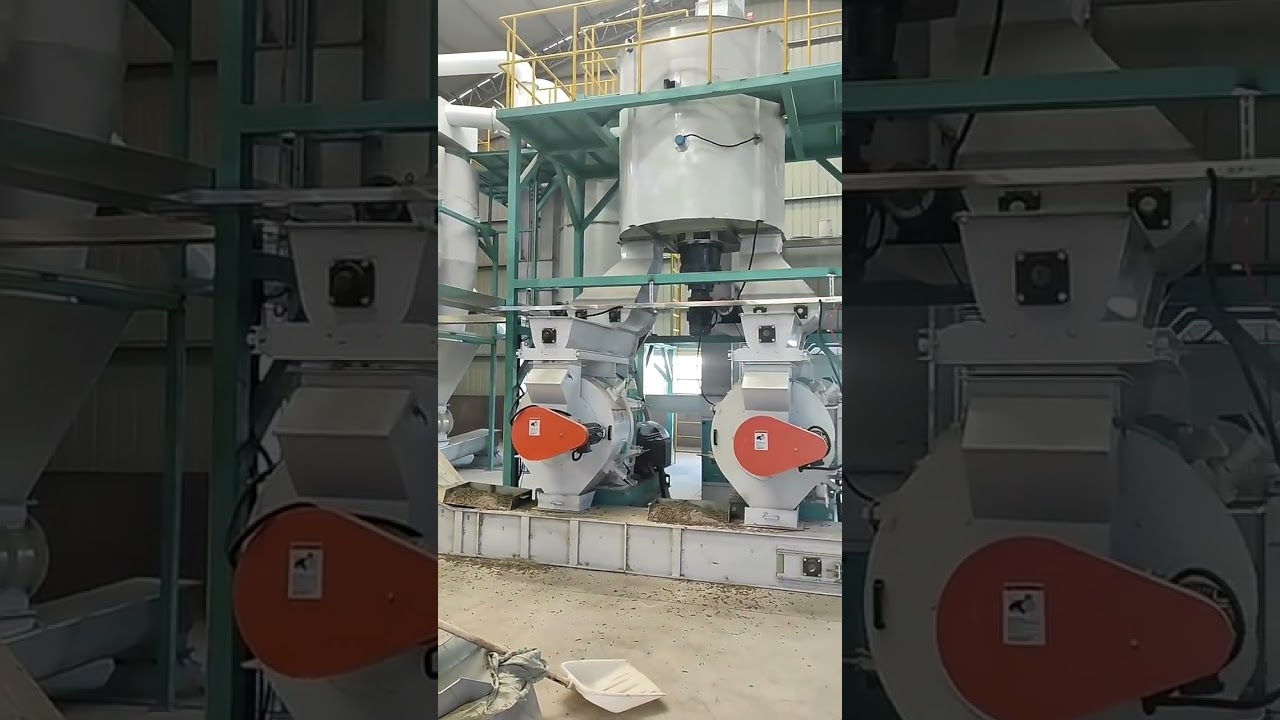
4 TPH ruminant feed plant — short factory clip
Short clip from a working ruminant feed plant, useful if you plan to scale beyond a single machine.
Shorts play vertically — tap to view the full clip on YouTube.

Built for rough ground and rough handling
The frame is welded heavy-gauge steel, the engine sits on a vibration-isolated base, and the pelleting head is the same proven assembly used across the whole flat die range. There is nothing in this machine that a village mechanic cannot service with standard tools.
Every unit ships with a spare die, a roller set, a knife and an engine service kit. That is deliberate: in remote locations a two-week wait for a wear part costs more than the parts themselves.
- Runs with no grid electricity — anywhere, any season
- Clutch and reduction gearbox protect the engine on start-up
- Screw-centre pressure adjustment — quick to set for hard or soft material
- Adjustable compression rate handles coarse material
- Visible chamber — blockages are seen and cleared in seconds
- Trailer-mounted option for mobile pelleting service

What It Actually Costs to Run Per Ton
Fuel is the biggest variable cost. Here is the honest breakdown so you can compare against buying commercial feed or running an electric mill.
| Model | Output (kg/h) | Diesel use (L/h) | Fuel per ton (L) | Operator needed |
|---|---|---|---|---|
| PM-200A | 200–300 | 1.2–1.5 | 5–6 | 1 |
| PM-260A | 400–600 | 1.6–1.9 | 3–4 | 1 |
| PM-300A | 600–800 | 2.0–2.3 | 3 | 1–2 |
| PM-400A | 800–1,200 | 2.3–2.5 | 2–3 | 2 |
Figures assume dry grain mash at 12–15% moisture with a correctly matched die. Fuel use rises with high-fibre material, a worn die or moisture above 16%. Bigger models are more fuel-efficient per ton.
Four Things That Kill a Diesel Pellet Mill Early
These are the failures we see most often in the field — all four are avoidable.
Overloading
Feeding faster than the engine can pull is the number one cause of belt slip and stalled engines. Feed gradually and watch engine note, not just the hopper level.
Skipping engine service
Oil and filter changes on the engine schedule are not optional. A seized engine costs more than years of filters.
Wrong compression ratio
A die matched to sawdust will block on grain mash and vice versa. Tell us the material when you order.
Storing hot pellets
Pellets must cool before bagging. Bagged hot, they sweat, cake and grow mould within days.
Diesel Flat Die Feed Pellet Mill Questions
How much diesel does it use per hour?
Can I use it where there is no electricity at all?
Is it as good as the electric version for pellet quality?
Can it be moved between farms?
What diesel engine brands do you use?
What is the difference between the A models here and the B/C electric models?
Can it make feed for fish and shrimp?
How long is delivery and what about spare parts?
Ask for a diesel model recommendation
Send the material, target output and whether power is available at your site. We come back with the right model, fuel estimate and a landed budget within 12 hours. Send the details to info@pelletmachines.net or WhatsApp +86 186 0385 1787 — engineers reply within 12 hours.
Other Pellet Machines for Small and Mobile Production
- Electric Flat Die Pellet Mill
- Farm-use Ring Die Pellet Mill
- Industrial Ring Die Pellet Mill
- Fish Feed Pellet Machine
- 200–300 kg/h Small Pellet Line
- Poultry Feed Hammer Mill
- Feed Ribbon Blender
- Feed Pellet Cooler
- Pellet Mill to Pakistan
- Plant in Bangladesh
- Hammer Mills to Palestine
- Feed Pellet Production Line
Get Your Diesel Pellet Mill Model and Running Cost
Tell us the material, target output and whether your site has power. You get a model recommendation, litres-per-ton estimate, trailer options and a landed budget within 12 hours.


